










4 min read
Germany's fiber market faces an economic challenge as operators seek to convert network coverage into active customers through streamlined processes and improved customer journeys.
 Netadmin Content Creator
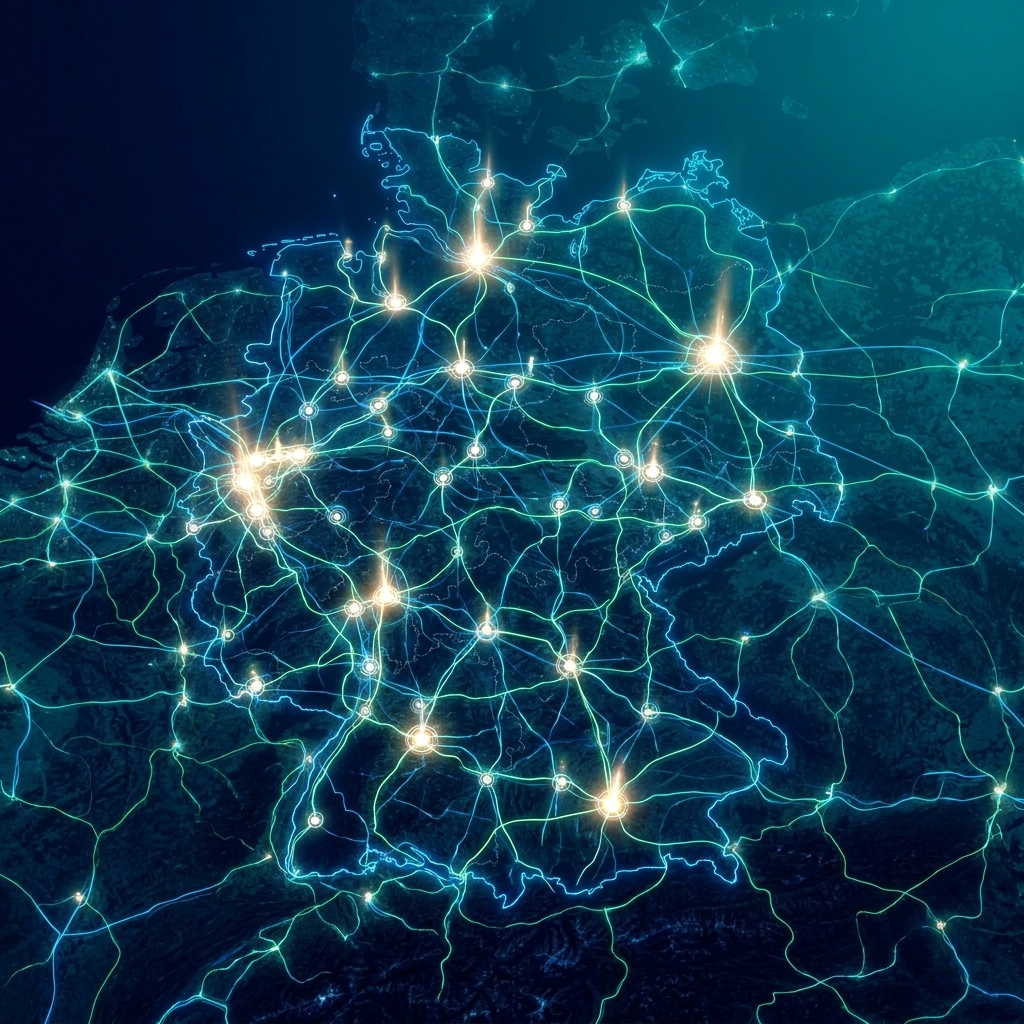
Over the past decade, Germany has invested heavily in building the infrastructure for a fiber-first future. According to the BREKO Market Analysis 2026, fiber networks passed around 28.7 million households and businesses by mid-2026. This corresponds to a coverage rate of 62.4 percent. However, only around 7.9 million of those connections were active — a take-up rate of approximately 27.5 percent.
At the same time the previous year, the figures stood at 24.3 million connected households and commercial premises, corresponding to around 52.8 percent of all households and businesses. Of those, 6.6 million connections were active, or around 27.2 percent of premises passed. This shows that while significantly more households and businesses are being reached in 2026, the share of active connections has barely changed.
The fiber may be in the ground in many places. But a large share of this infrastructure is not yet generating revenue.
For network operators, municipal utilities, and investors alike, Germany’s fiber market is entering its next — and perhaps most decisive — phase. The central question is no longer only how quickly networks can be built. What matters now is how effectively operators can turn network coverage into active customers.
What must fiber operators do next to monetize their infrastructure, increase take-up, and make Germany’s fiber ambitions commercially sustainable?
This is where the post-build-out phase becomes a customer journey challenge as much as an infrastructure challenge. Households and businesses need to understand the offer, check availability, order easily, get activated without friction, and receive a reliable service experience from the first interaction.
From network coverage to active customers
Fiber roll-out is often measured in kilometers, homes passed, and build-out milestones. These metrics matter, but they do not tell the whole story.
For operators, commercial success is decided by what happens next.
Can potential customers easily check whether fiber is available at their address? Do they understand the offer? Can they place an order online without unnecessary steps? Can the operator move that order smoothly into activation, provisioning, billing, and support?
If the answer is no, the problem is not only marketing. It is operational.
Low take-up rates can be caused by a complicated customer journey: unclear availability information, manual order handling, slow internal coordination, disconnected systems, or too many handovers between teams. Each friction point creates delay. Each delay increases the risk that customer interest is lost.
For Stadtwerke, this matters even more. They often operate with strong local trust and carry long-term responsibility for regional infrastructure. The digital service experience needs to match that trust.
Make it as easy as possible to become a customer
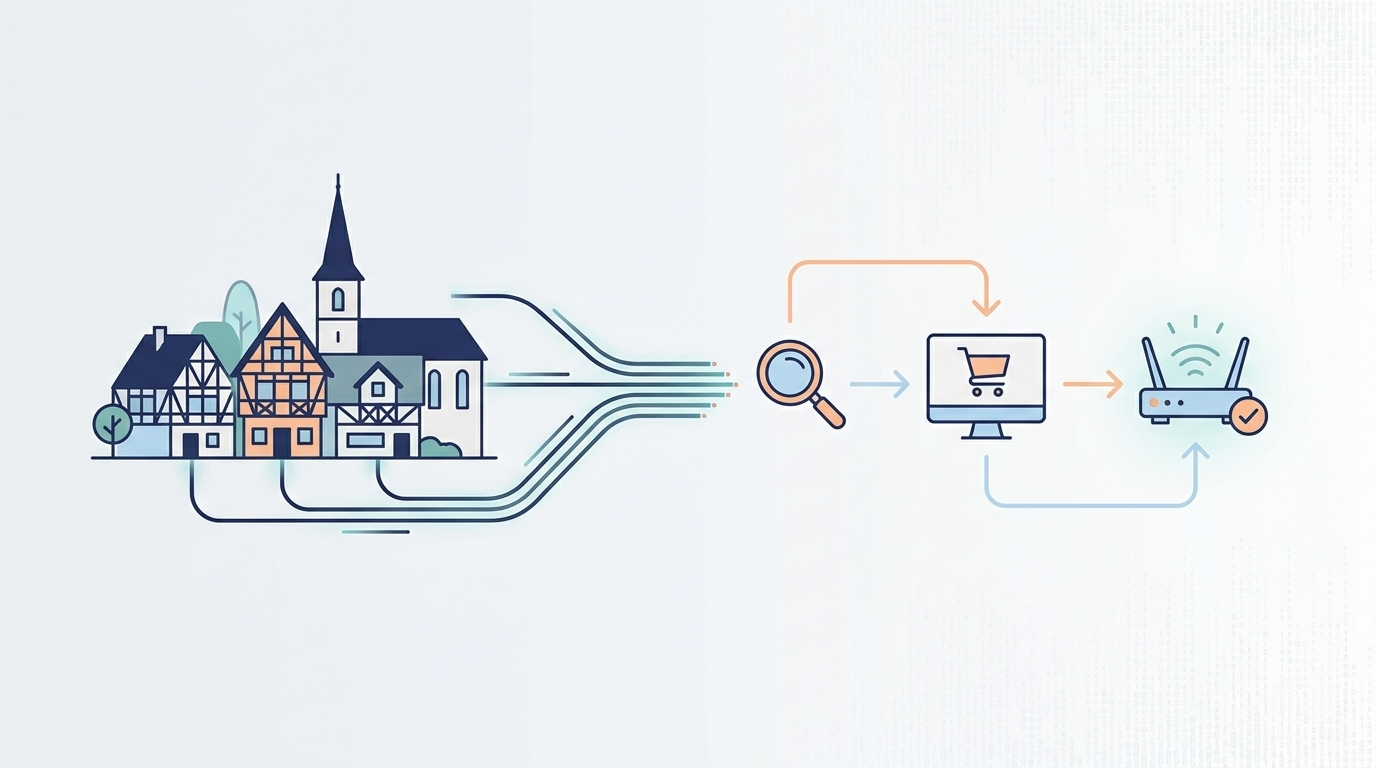
The practical goal is clear: for households and businesses, becoming an active fiber customer must be as easy as possible.
That requires an end-to-end flow from interest to activation:
-
clear service information,
-
reliable address and availability checks,
-
simple online ordering,
-
automated order capture,
-
seamless handover to provisioning and activation,
-
transparent customer communication,
-
and a clear transition into billing and ongoing service management.
When these steps are connected, the process becomes faster, simpler, and more reliable for customers. Internal teams spend less time chasing information. Operators can increase their take-up rate without increasing administration at the same pace.
This is the shift from “the network is available” to “the service is easy to buy, activate, and use.”
From roll-out to real customer value
SSW-Stadtwerke St. Wendel GmbH & Co. KG sees the next phase of fiber expansion above all as a question of operational efficiency: how can new orders be managed more simply and reliably from order intake to activation?
Netadmin supports the downstream processes from order to activation. This makes the path to an active connection easier and more transparent for customers, while customer advisors are relieved from manual process steps.
As Frank from SSW-Stadtwerke St. Wendel GmbH & Co. KG puts it:
“Your connection to the future! With this slogan, we are not only referring to the physical connection to the future, but also to simple access and added value for our customers: they can order, activate, and use their connection with ease.”
Zero touch does not mean giving up customer relationships
A zero-touch customer journey is sometimes misunderstood. It is not about removing the human relationship between a local operator and its customers.
It is about removing unnecessary manual work from standard processes.
For customers, this means fewer delays and fewer unclear steps. For operators, it means fewer recurring tasks, better data quality, more reliable execution, and a clearer view of every order.
Personal support remains important, especially in complex cases. But it should not be required for every standard order, every address check, or every status update.
The operators that succeed after build-out are those that combine local presence with scalable digital processes.
Monetization starts with operational readiness
Turning fiber investment into revenue requires control across the full customer lifecycle.
Operators need to know:
-
which addresses are serviceable,
-
which products and services are available,
-
where each order is in the process,
-
what needs to happen before activation,
-
how customers are being informed,
-
and how service delivery connects to billing and ongoing operations.
Without this control, growth becomes harder to manage. The operator may generate interest, but struggle to convert it efficiently into orders. Teams may sell more, but administration grows with every new customer. Data may exist, but not always in the right place at the right time.
With end-to-end processes, operators can scale more sustainably. Orders move faster. Teams get a better overview. Customers experience clearer processes. The business can turn network coverage into active connections more effectively.
For Stadtwerke and regional operators, this is also about realizing the value of a long-term infrastructure investment for the people and businesses in the region.
The next question after build-out
For Stadtwerke and fiber operators that have already invested in build-out, the next question is not whether the infrastructure is valuable. The question is how quickly and effectively that value reaches customers.
A practical starting point is to analyze the customer journey from availability check to activation:
-
How easy is it for a customer to check availability and place an order?
-
Where do customers experience friction or uncertainty?
-
Which steps still depend on manual internal handling?
-
Do teams have a clear overview of order status, activation, and customer communication?
-
Can the organization increase take-up without increasing administrative effort at the same pace?
Fiber build-out creates the opportunity. A simple, end-to-end, and scalable customer journey turns that opportunity into active customers.
Related links:
Learn more about how Netadmin supports fiber operators with end-to-end service fulfillment.
 For more information, please contact
Johan Hjalmarsson, Product Marketing Manager, Netadmin Systems.
Email: johan.hjalmarsson@netadminsystems.com